







Press Release: Simplex Wireless Introduces SimplexAI™
June 10, 2026
IPAe vs IPAd: Why the SIM-Side Approach Matters for Retrofits
June 16, 2026
The data is there. The problem is everything between the question and the answer.
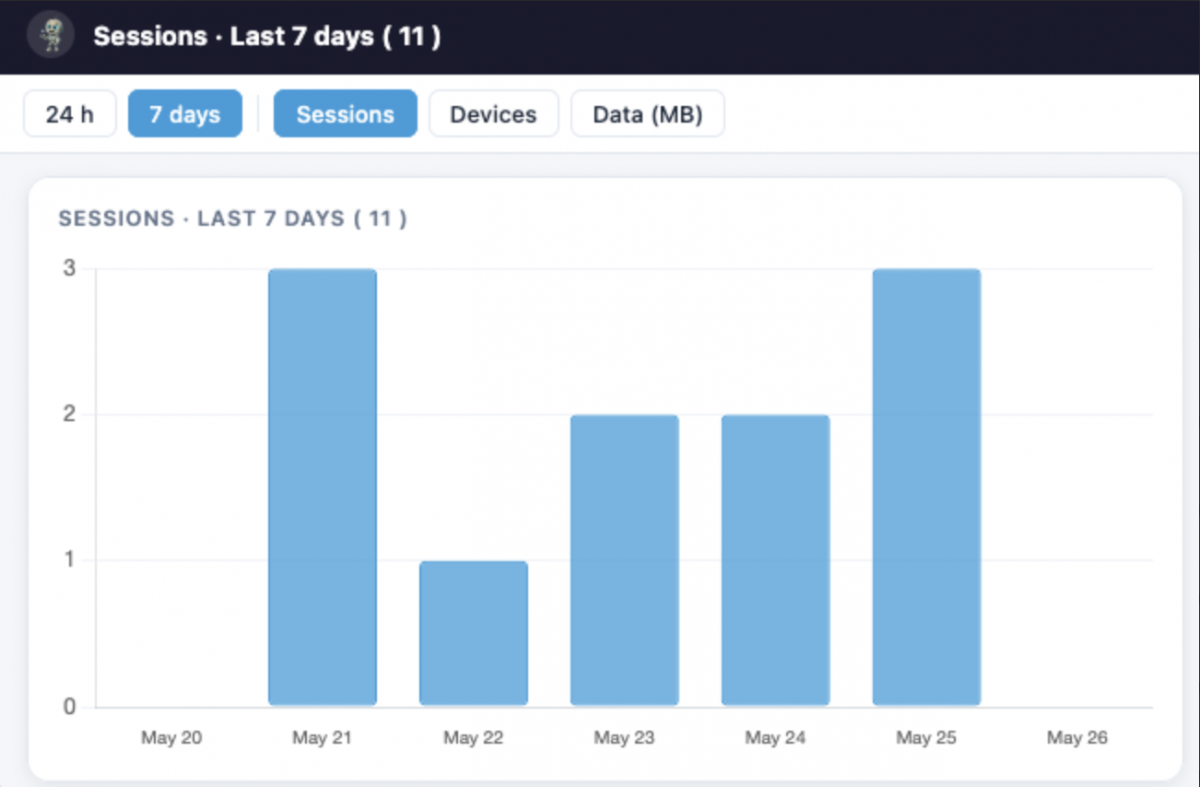
A device stops reporting. A carrier changes behavior. Data consumption on one SIM jumps overnight. You know the event happened — your devices are generating session records, usage logs, and connection timestamps constantly. What you don’t have is a fast path from “something’s wrong” to “here’s what’s happening and why.”
That gap is what this piece is about.
What “Getting an Answer” Actually Involves Today
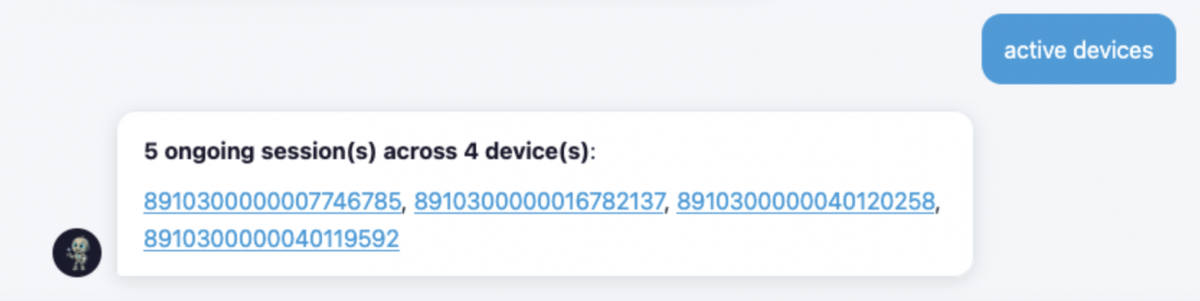
Ask most IoT teams how they’d answer a question like “how many devices are currently active in Germany” and you’ll get a version of the same workflow: open the portal, find the right filter, set the time window, wait for the report to load, export to a spreadsheet if the numbers need to go somewhere, and then interpret what you’re looking at.
That’s on a good day, when you know exactly where to look. For less routine questions — which devices are showing unusual session termination patterns, what the trend looks like across the last 30 days by time of day, which carrier is accounting for the anomaly — the path gets longer. You might open multiple views. You might pull data from different parts of the platform. You might ask someone who knows the portal better than you do.
The underlying data hasn’t changed. The session records, the APN assignments, the carrier connections, the data volumes — all of it is there. What’s missing is the ability to ask a direct question and get a direct answer, without the interface becoming the obstacle.
Understanding what a well-structured IoT APN configuration looks like helps — but even with a clean setup, the visibility layer sitting above it hasn’t kept pace with the questions operators actually ask in production.
Why IoT Makes This Harder Than Regular IT Visibility
Enterprise IT visibility tools work reasonably well because the assets are stable: servers, laptops, network appliances. The inventory changes slowly. The monitoring layer has time to mature alongside the infrastructure.
IoT fleets don’t behave that way. A fleet of a few hundred SIM-connected devices generates session data continuously, across multiple carriers, across multiple countries, often with variable connection patterns tied to the physical behavior of the device itself — a tracker that only connects when a vehicle is moving, a sensor that only transmits at the top of the hour. The visibility problem isn’t just volume. It’s that the data is inherently multi-dimensional, and the questions you need to ask of it change depending on what’s happening in the field.
Choosing the right SIM and cellular strategy accounts for the deployment side. But operational visibility — knowing what your fleet is doing right now, which devices are behaving differently than they were yesterday, which carrier is responsible for a connectivity dip — is a separate problem that sits on top of the connectivity layer.
Most management portals were built to let you configure and control your fleet. They weren’t built to answer operational questions quickly. That distinction matters more as fleets grow.
What Goes Wrong When Visibility Is Slow
The most common failure mode isn’t a single device going offline. It’s a pattern that develops over hours or days that nobody catches until a customer reports a problem.
A traffic spike that starts small looks like noise. By the time it’s clearly anomalous, it’s already affected sessions across multiple devices. If spotting that pattern requires a manual check — opening a specific view, running a report, comparing against a baseline you had to build yourself — the window between “something is changing” and “we know about it” stays wide.
Data overages follow the same logic. Right-sizing your IoT connectivity plan requires knowing what your devices actually consume. If you can only answer that question in aggregate, or by pulling device-level reports manually, you’ll consistently find out about outliers after they’ve already cost you. The device consuming ten times what it should have been was generating that data the whole time — it just wasn’t visible.
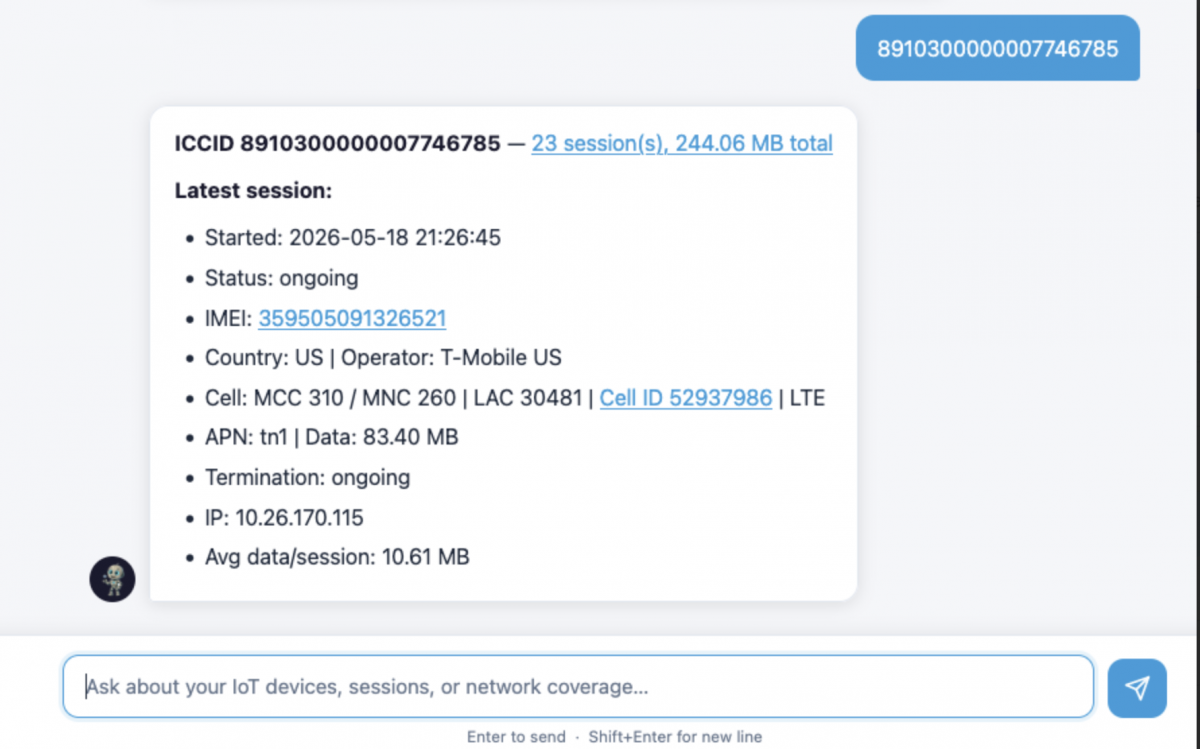
Support escalations are the third failure mode. A field technician asks which carrier a device is on, what its last session showed, whether the termination cause was normal. If the answer requires a portal lookup by someone back at the office, that’s a delay baked into every support interaction. The information exists. The access path is the bottleneck.
Three Things That Close the Gap
1. Know what questions your team actually asks. Most operational questions are variations on a small set: what’s active, what’s consuming unusually high data, what changed recently, is a specific device behaving normally. If your platform can answer those questions directly, the visibility problem shrinks considerably. If it can’t, you’re building workarounds.
2. Treat anomaly detection as a requirement, not a feature. Waiting to be told something is wrong is reactive by design. A platform built for IoT fleet management should flag unusual traffic patterns automatically, without requiring you to build the baseline yourself or check manually on a schedule.
3. Make device-level data accessible to everyone who needs it. Network ops, customer support, and management ask different questions of the same fleet data. If answering those questions requires specialist knowledge of a portal interface, you’ve created a dependency. Access to session history, carrier status, and data consumption should require a question, not a training session.
That’s exactly what SimplexAI is built to do. Ask in plain English — “which SIM used the most data last week,” “are there any anomalies in the last 24 hours,” “what carrier is this device connected to right now” — and you get the answer directly, without navigating a dashboard or opening a report. Try SimplexAI in your Simplex account today.
This article was curated by Jan Lattunen, CCO Simplex Wireless
About the Author: Jan Lattunen manages Sales and Marketing for Simplex Wireless. Jan has 20 years’ experience in working with SIM card technology and was involved in launching the eSIM in North America with major carriers and OEMs. His expertise in telecommunications is around SIM cards. On a personal note, Jan is a family man and avid cyclist with advocacy for safety in the roads. You can connect with Jan on https://linkedin.com/in/JanLattunen