







M2M SIM Cards: What They Are and How They Differ From Consumer SIMs
August 6, 2026
What Is 5G NTN IoT? A Simple Guide
August 12, 2026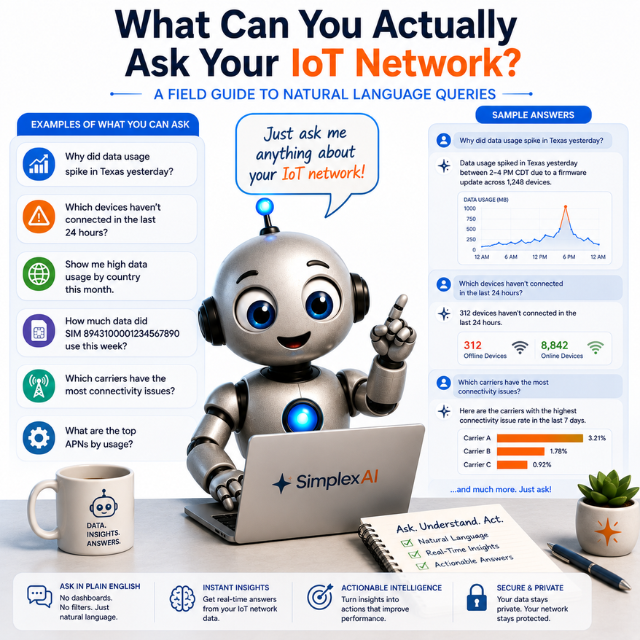
What Can You Actually Ask Your IoT Network? A Field Guide to Natural Language Queries
A practical map of the questions SimplexAI answers directly, so your team stops guessing what’s askable and starts asking.
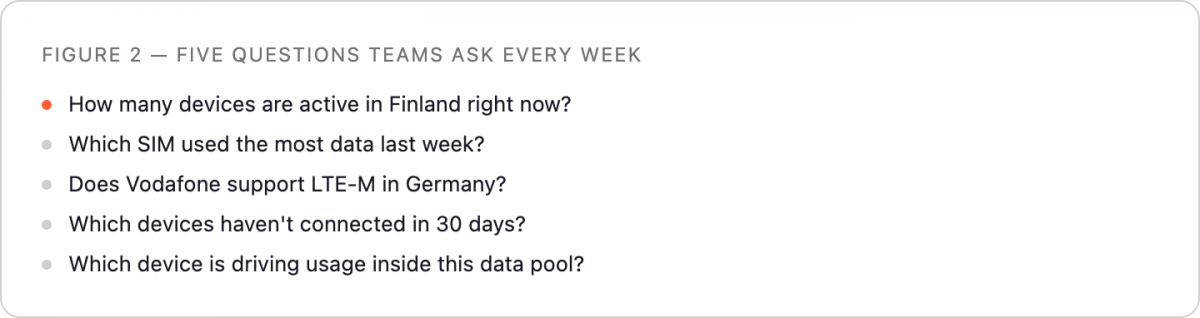
A device in Finland stops sending data mid-shift. The old routine: open a dashboard, filter by country, cross-reference a spreadsheet of SIM assignments, and wait on whoever has report access. The new routine: type “How many devices are active in Finland right now?” and get an answer in seconds. The data was never the problem — getting an answer from it shouldn’t take this long, and for most teams, it still does.
What a natural language query layer actually does
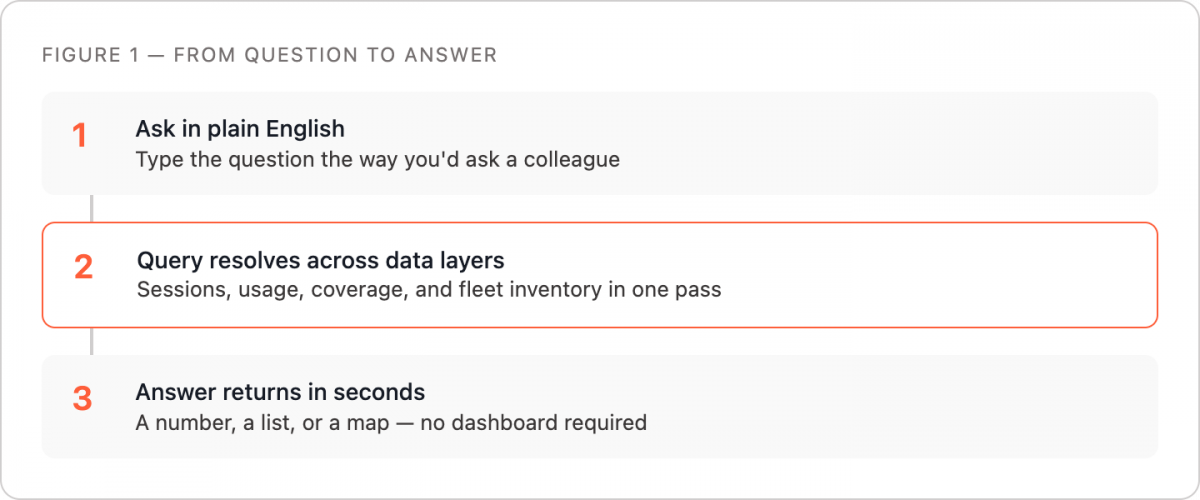
A conversational interface like SimplexAI sits on top of your account and device data and answers plain-English questions directly, instead of requiring you to build a report, write a query, or learn where a specific metric lives in a dashboard. You are not choosing from a fixed set of pre-built views. You are asking a question the way you would ask a colleague, and getting back the specific number, list, or map you need.
This is a different category from a dashboard. A dashboard shows you what someone else decided was worth displaying, arranged the way someone else decided to arrange it. A query layer answers the question you actually have right now, even if nobody built a chart for it. That distinction matters more than it sounds. Most of the questions engineers and operations teams ask are one-off: not “show me the usage dashboard,” but “which SIM used the most data last week,” or “does Vodafone support LTE-M in Germany.” Those are exactly the questions a fixed dashboard was never built to answer on demand.
Why this matters more for IoT than for typical IT monitoring
Consumer analytics tools assume a relatively small, relatively uniform set of things to monitor. IoT fleets are the opposite. A single account might span dozens of countries, several carrier technologies (LTE-M, LTE, 5G, and more), and thousands of individual SIMs, each with its own session history, data usage pattern, and location. That is a lot of dimensions to cut across, and most of the interesting questions cross more than one of them at once: usage by device and by country, coverage by operator and by technology, device status by carrier type and by account.
Fixed dashboards handle two or three of those dimensions well. The moment you need a fourth, someone is exporting to a spreadsheet or asking an engineer to write a one-off query. That is the actual mechanism behind a pattern many fleet operations teams already recognize: they spend more time finding IoT data than acting on it. A conversational layer collapses that multi-dimensional search into a single sentence, because it queries the underlying data directly rather than through a chart someone pre-built.
Where teams get stuck without it
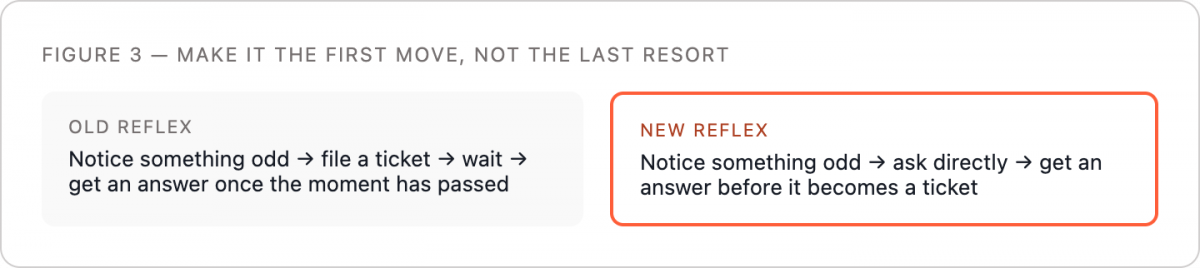
A few patterns show up repeatedly in teams that have not yet closed this gap. The most common is treating every question as a support ticket: a spike in data usage gets noticed, but confirming which device caused it means filing a request and waiting. By the time the answer comes back, the anomaly has already cost money or triggered a support call from a customer.
The second is not knowing coverage until it is too late. A team plans a deployment in a new country, assumes the coverage map is accurate, and finds out during rollout that a specific operator does not support the cellular technology their hardware needs. Coverage maps lie far more often than teams expect, and confirming support ahead of time is a five-second question rather than a week of emails, once you have a direct line to the data.
The third is losing track of usage at the device level. Data pools and shared allowances make sense at the account level, but when one device inside a pool is consuming disproportionately, most teams do not find out until the bill arrives. Understanding how an IoT data pool actually works is one part of the picture; being able to ask which device inside it is driving the number is the other.
How to actually use this
Getting value out of a natural language query layer is less about learning new syntax and more about changing what you reach for first.
Start with the questions you already ask by habit. Every team has a handful of recurring questions: which devices are online, which SIM used the most data, whether a given country has support for a given technology. Those are the first things to try asking directly, because they are the ones currently costing the most time.
Make it the first stop, not the last resort. The value only shows up if asking is the default reflex when something looks off, rather than something the team reaches for after a ticket has already been filed or a bill has already landed.
Scope who asks what. Because natural language removes the barrier of needing to know a dashboard or a query language, more people on a team will use it: network ops, support, sales, and management alike. That is the point, but it also means access should match role, the same way report permissions would in any other system.
None of this requires training. That is the actual design goal of a conversational interface: the questions that used to require a ticket, a spreadsheet, or a specialist now take as long as typing a sentence.
This article was curated by Jan Lattunen, CCO Simplex Wireless
About the Author: Jan Lattunen manages Sales and Marketing for Simplex Wireless.
Jan has 20 years’ experience in working with SIM card technology and was involved
in launching the eSIM in North America with major carriers and OEMs. His expertise
in telecommunications is around SIM cards. On a personal note, Jan is a family man
and avid cyclist with advocacy for safety in the roads. You can connect with Jan on
https://linkedin.com/in/JanLattunen