






What Is an MVNO? And Why It Matters More Than You Think for IoT Connectivity
May 4, 2026
From Physical SIMs to SGP.32: What Changes for Your IoT Fleet
May 11, 2026
How to Evaluate an IoT SIM Provider: A Due Diligence Guide for Multi-Year Deployments
Picking the wrong connectivity provider doesn’t just cost money — it can strand hundreds of deployed devices when you can least afford it.
Most IoT deployment decisions start with coverage maps and pricing tiers. Those things matter, but they answer the wrong question first. The question that actually determines long-term risk isn’t “can they cover my deployment region?” It’s “will they still be operating in year six of a ten-year device lifecycle?”
The IoT MVNO (Mobile Virtual Network Operator) market is crowded, fast-moving, and subject to real business failures. Providers get acquired, run out of runway, or quietly wind down services — and when that happens, companies managing deployed device fleets face emergency migrations that are expensive, disruptive, and sometimes physically impossible without hardware replacement. That exposure is rarely discussed during the sales process. This guide gives you the framework to close that gap before you commit, not after.
What to evaluate
Six criteria separate providers worth trusting with a long-term deployment from those that look attractive on a pricing sheet and nothing else.
The financial model is the starting point. The IoT connectivity market has a high proportion of VC-funded operators who are burning cash to acquire customers and grow market share. That model works until it doesn’t — and when funding rounds stop, services get disrupted before customers have time to migrate. A cashflow-positive provider with a stable revenue base is a categorically different risk profile. Ask directly how the business is funded. A credible provider will answer.
Corporate structure and parent company backing matters alongside the financial model. A young MVNO subsidiary of a 25-year-old software company serving Tier 1 carriers is a different proposition than a standalone startup. The parent company’s history, client base, and financial health all transfer as backstop to the subsidiary’s reliability.
eSIM portability is your exit strategy if a provider fails. The critical distinction is whether your devices support Remote Sim Provisioning (RSP) profile switching — meaning you can migrate to a new provider without physically touching the hardware. If your device fleet requires a truck roll to swap SIMs, a provider failure becomes a significant capital event. Confirm OTA switching capability with your specific hardware before signing.
Network architecture determines coverage quality in practice. Multi-carrier connectivity through direct carrier agreements is more reliable than aggregated access through intermediaries — direct agreements mean better support escalation paths, more control over service quality, and fewer single points of failure in the network stack.
Platform ownership tells you who you’re actually talking to when something breaks. If the provider runs their own SIM management platform built in-house, their engineering team can diagnose and fix issues directly. If they’re reselling someone else’s platform, they’re a middleman in their own support process.
Finally, operational track record: how long have they been running, and what does their maintenance history look like? Providers who publish a status page with historical incident data are signaling accountability. Providers who don’t are telling you something.
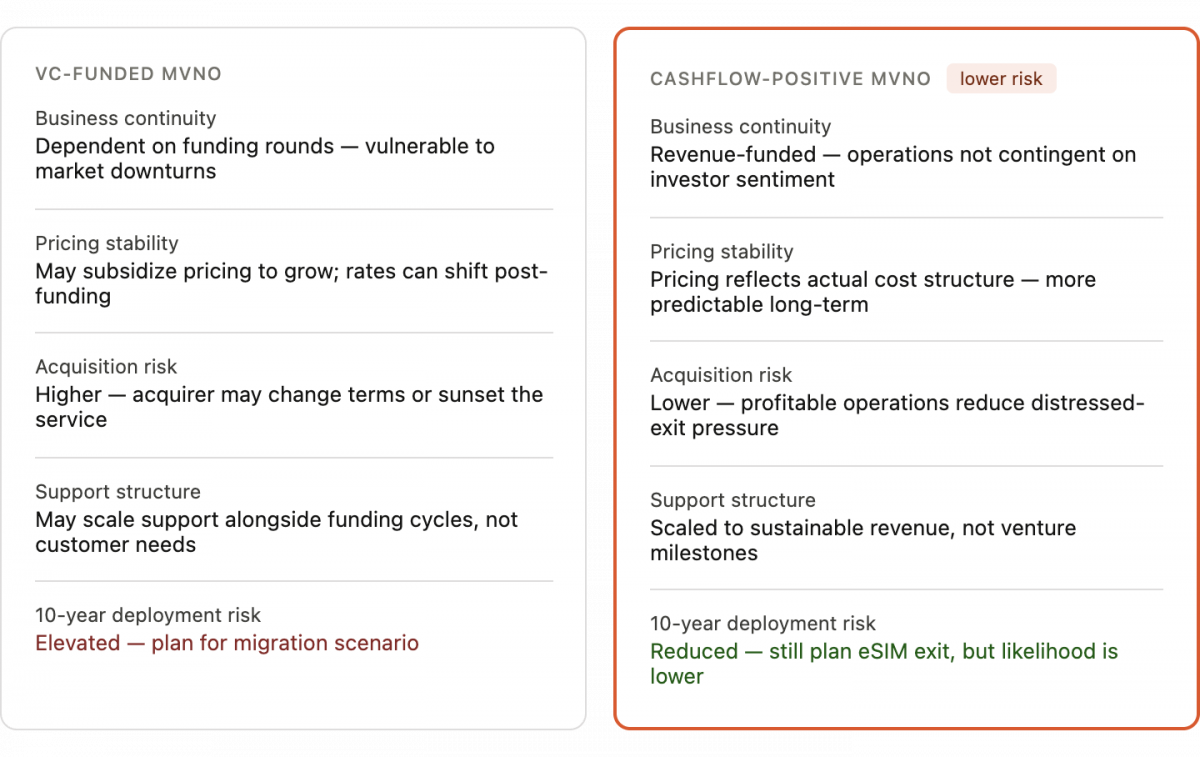
Figure 1 — Comparison cards: VC-funded MVNO vs. cashflow-positive MVNO
Common pitfalls when evaluating providers
The most consistent mistake is letting pricing dominate the evaluation. A provider offering the lowest per-MB rate may be doing so because they’re subsidizing customer acquisition with investor capital — a model that doesn’t survive indefinitely. Pricing transparency matters, but the right question isn’t just “what does it cost today?” It’s “what does the pricing model reveal about the underlying business?”
The second pitfall is treating eSIM support as a binary. Buyers hear “we support eSIM” and assume they’re protected from lock-in. The reality is more specific: OTA profile switching requires compatible hardware, a properly structured eUICC (embedded Universal Integrated Circuit Card), and a provider platform that supports the relevant GSMA standard. If any of those three elements is missing, the theoretical portability doesn’t translate into practical migration capability. Confirm all three before treating eSIM as your exit option.
The third mistake is skipping the trial period. Most providers offer trial SIMs, and the trial isn’t just for testing signal coverage — it’s for evaluating support response times, portal usability, and how the provider communicates when things don’t work as expected. A provider that goes quiet during a trial period technical issue tells you exactly how they’ll behave when a production problem surfaces at 2 AM.
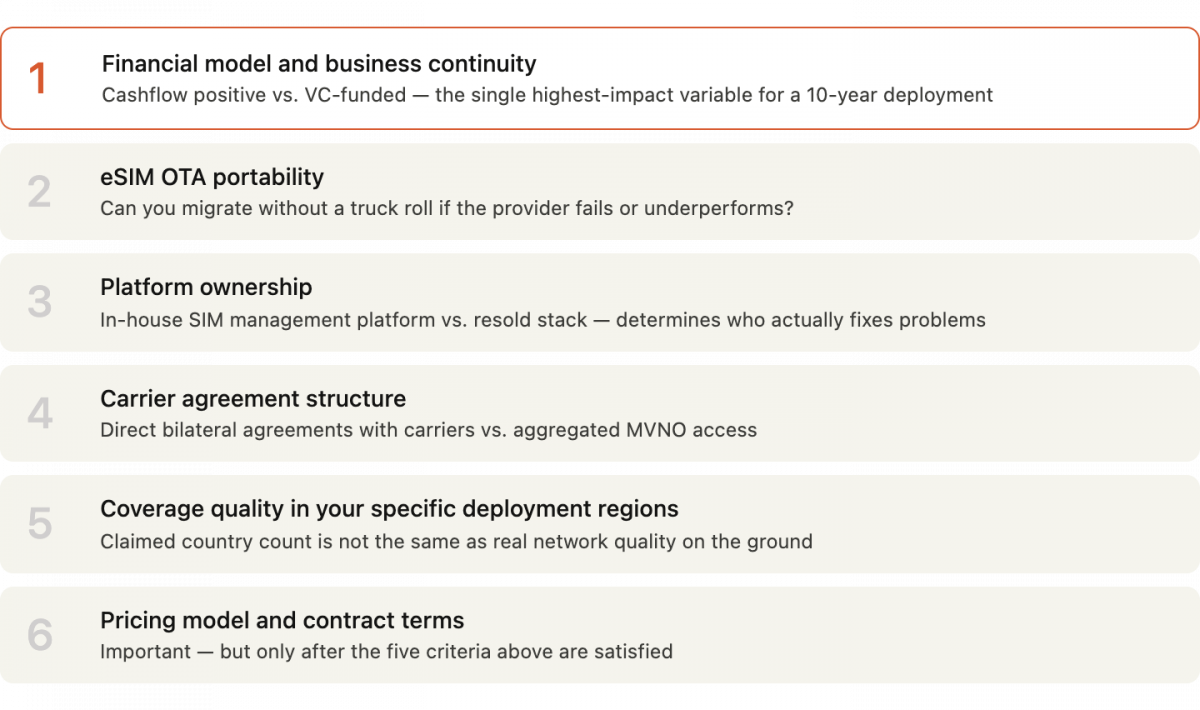
Figure 2 — Ranked list: evaluation criteria by deployment risk weight
How Simplex addresses each criterion
On financial model: Simplex operates as a cashflow-positive business — not VC-funded, not burning toward a growth milestone. When prospects ask whether Simplex will still be operating in a decade, the answer isn’t just “we think so” — it’s grounded in an organizational track record that predates the IoT connectivity market itself.
On eSIM portability: Simplex’s xoSIM platform supports over-the-air profile switching via SGP.32, the current GSMA standard for IoT eSIM management. The EIM (eSIM IoT Manager) server is built entirely in-house in Atlanta, which means Simplex isn’t dependent on a third-party platform operator to execute a migration. If a customer ever needed to leave, the exit path is technically available without hardware replacement on compatible devices. Simplex acknowledges one honest limitation here: OTA portability still requires the customer’s hardware to support the relevant eSIM spec. That’s a device decision made before deployment, not something the provider can fix retroactively.
On platform ownership: the SIM management platform is proprietary, not licensed from an MVNE (Mobile Virtual Network Enabler). When something breaks at the network layer, the team debugging it is the same team that built it. That shortens escalation paths considerably compared to providers who operate on resold infrastructure.
On carrier agreements: Simplex holds bilateral roaming agreements with carriers that explicitly permit permanent roaming — a distinction that matters for IoT deployments where devices may spend their entire operational life attached to a network other than their home carrier. Standard roaming arrangements used by consumer-grade providers don’t carry this permission, which creates a real termination risk for devices in multi-region deployments.
On pricing: no activation fees, no platform fees, no minimum contract commitments on standard plans. Plan tiers can be adjusted monthly. Flexible plan structures — prepaid, pay-as-you-go, and pooled bundles — mean you’re not forced into a fixed commitment model as your deployment scales or your usage patterns change.
Questions to put to any provider
These apply equally to every provider you evaluate — including Simplex.
Is the company cashflow positive, or VC-funded? If VC-funded, what is the runway, and what happens to customer SIMs in a wind-down scenario?
Who owns the SIM management platform? If it’s licensed from a third party, who holds the relationship with that platform operator, and what happens to your account if that relationship ends?
What GSMA eSIM specification do your SIM cards support — SGP.02, SGP.22, or SGP.32 — and does OTA profile switching require hardware changes on my specific modules?
Which carriers provide your coverage in my primary deployment regions, and are those direct bilateral agreements or aggregated access through another MVNO?
Do your roaming agreements explicitly permit permanent roaming, and in which countries? Can you provide that in writing?
Where is your status page, and how far back does the maintenance history go? Have there been any unplanned outages in the past 12 months?
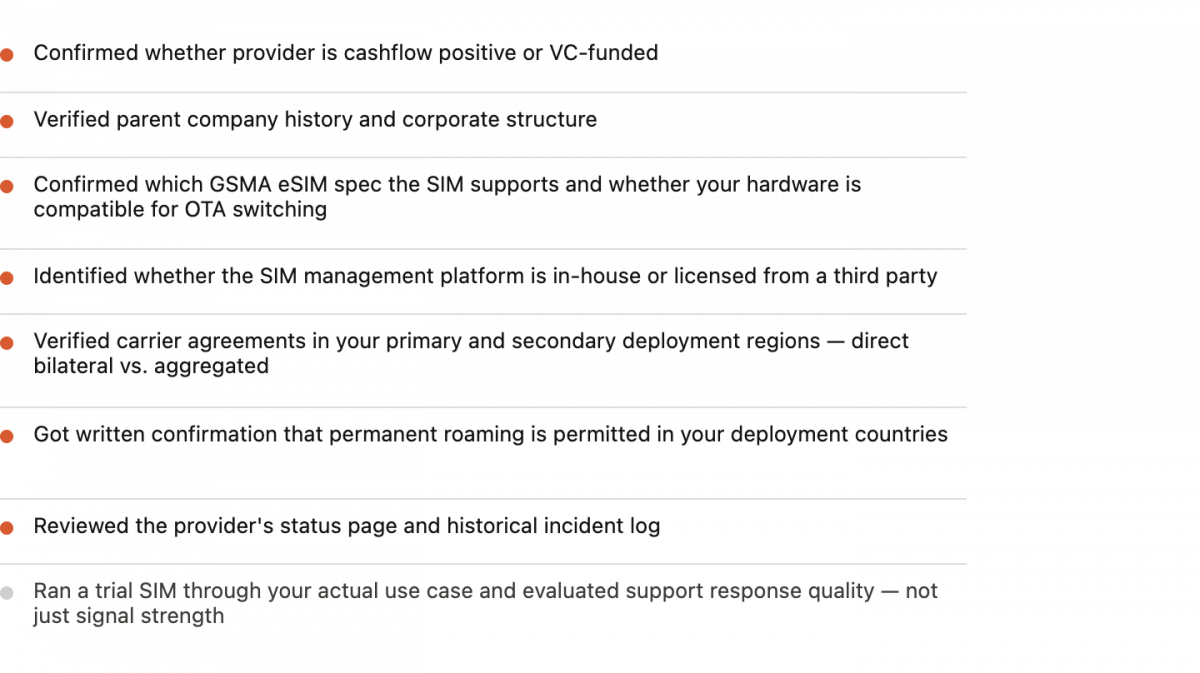
Figure 3 — Checklist: due diligence before you sign
Before you commit
A provider who can’t or won’t answer the questions in this guide is giving you the most important piece of information available: they haven’t thought through your deployment risk, or they have and don’t want to discuss it. Either way, that’s the answer.
If you’re evaluating connectivity for a deployment that will outlive most software projects, start your trial with Simplex — request a trial SIM, or bring your specific deployment questions directly to the sales team at sales@simplexwireless.com.
This article was curated by Jan Lattunen, CCO Simplex Wireless
About the Author: Jan Lattunen manages Sales and Marketing for Simplex Wireless. Jan has 20 years’ experience in working with SIM card technology and was involved in launching the eSIM in North America with major carriers and OEMs. His expertise in telecommunications is around SIM cards. On a personal note, Jan is a family man and avid cyclist with advocacy for safety in the roads. You can connect with Jan on https://linkedin.com/in/JanLattunen